Day 3
I wake at putt putt after a decent night’s sleep. Unlike Wadel’s Dairy which was out in the country and quiet, there was a bit of traffic noise as cars cruised by through the night. Also, the parking lot’s lights were bright, so I had to lower the opaque window shades over the ModVan’s mesh screen windows to block the light, which prevented any air flow. I’m of the age where air flow and things like cooling blankets and ceiling fans are sanity savers! Still, it was a fun place to stay and I have no regrets.
The miles tick by quickly in Maine. As I drive north outside of Bangor, the roads morph from multi-lane highways to single lane. I’m in the country now. I stop in Calais, Maine, the last US city before the Canadian border where I’ll cross over into New Brunswick. Andrea Gibson, the recently deceased and brilliant poet laureate of Colorado, hails from this small town. She once wrote, “In the end I want my heart to be covered in stretch marks.” Me too, Andrea. Me too.
I arrive at the border station, something I’ve never done before in a car. Even though I have nothing to hide, I’m nervous. My first step is an officer standing at the entrance. He’s no nonsense and asks me where I’m headed. “Newfoundland,” I tell him. “Personal or business?” He asks. “Personal,” I say. “Okay, you’re going to drive to that orange cone,” he explains while pointing at said cone. “Then wait for the next officer to wave you through the scanner.” Scanner?
When I’m directed to the scanner, the officer explains I need to drive five miles per hour through it. It’s a very short distance to drive that slow, and I struggle getting the van beyond two to three miles per hour without feeling like I’ll surpass five if I give it much more gas. I hear the officer saying, “You need to go faster!” I press the gas a little harder, but then back off almost instantly when a pigeon lands right in front of my left front tire, completely unfazed. “Five miles an hour!” I hear the officer yell.
I reach the other side of the scanner, never having reached 5 mph. The officer approaches my window, slightly perturbed. “Did you not hear me say you need to go five miles per hour?!” I answer, “I did hear you, but apparently the pigeon blocking the road didn’t.” He smirks, breaking form ever so slightly, and I feel like I can breath again.
Someone radios him and clears me. Apparently you don’t really need to go exactly 5 mph to get scanned properly. I suspect the interrogation/interview is over as I drive away from the station, but nope. There’s another check point. This one looks like a toll booth with multiple lanes. Here, I am met by a young woman wearing a black bullet-proof vest with all sorts of things hanging from it. In any other clothes and setting, she’d look friendly. But here? She’s all business.
“Where are you headed?” she asks me. In life? In Canada? After I die? I assume she means Canada, so I answer, “Newfoundland.” And I can’t help myself, it feels too brief of an answer and I’m a little nervous, so I continue talking. Which is exactly what I shouldn’t do. “I’m driving there, and my family is flying in to meet me.”
She proceeds to ask why they didn’t drive, and it’s not in an inquisitive, get-to-know-you kind of way. “Because I wanted to backpack in Gros Morne National Park, and none of them like backpacking as much as I do,” I explain semi truthfully. Larry would actually love to be with me, but he can’t take that much time off work. I decide that’s best left unsaid. She seems satisfied with the answer.
The rest of the conversation goes like this:
Her: “Are you traveling with an animal?”
Me: “No.”
Her: “Is there anyone else traveling with you?”
Me: “No.”
Her: “Are you sleeping in the van?”
Me: “Yes. But when my family arrives we’ll stay in hotels some, too.” Stop talking so much, Nancy.
Her: “How long will you be in Canada?” I have to do quick mental math because they’re coming and going on different time lines. I hope my hesitation doesn’t make her suspicious of something nefarious.
Me: “We’ll drive back across the border on August 28.”
Her: “We?”
Me: “Yes, my daughter and husband will fly out of Portland, so they’ll be with me when I come back across on the 27th. I mean the 28th! My son flies out of Newfoundland on the 27th.”
Shit. Surely she realizes this has to be the truth because only family vacations can be this complicated.
Her: “Do you have a firearm?”
Me: “No.”
Her: “Do you own a firearm?”
Me: “No.”
This is true, but it made me curious—why does it matter if I don’t even have it with me? Maybe she asked because she expects every American to say “yes” and she has a running tally of the small percentage who don’t.
Her: “Do you have any alcohol or tobacco products in the car, including cannabis?”
Me: “Cannabis and tobacco, absolutely no. Alcohol, yes. I think four beers.”
Her: “You think four beers?”
Me: “Yes, I’m pretty sure it’s four.”
I remember packing six and I’ve camped two nights, so yes, there should only be four left. But then I remembered there were five left, since I bought a beer at the putt putt place. Probably best not to even try to explain camping at putt putt and drinking beer there.
And then I wonder if the scanner picked up the couple dozen sparkling water cans I brought, so I decide more words are better in this instance. “I also have a bunch of cans of sparkling water.”
She nods approvingly and moves on.
Her: “What do you do?”
I want to say “It’s complicated.” Outdoor educator, writer, hiking guide—I’m certain it’s too much. So I keep it simple and say, “veterinarian.”
Her: “And you’re sure you’re not traveling with an animal?”
I want to say, “You’d know if I was because she’d be in the passenger seat staring a hole through you, thinking she’s about to get a pup cup in a coffee shop drive through.” Instead, I say, “No.”
Her final stab at catching me with contraband (or maybe just doing her job and asking all the standard questions) comes when she asks me if I have mace or pepper spray. I tell her no, but it’s an unintentional lie. I do have pepper spray (or maybe it’s mace? I don’t know the difference) in my purse. In the moment, I can’t remember if’s really there or not since I changed purses before leaving home. She doesn’t pick up on my hesitation.
She releases me (finally) and I feel like I need to pull over and drink that extra beer to decompress.
There’s no question I’m on Canadian soil when Google Maps automatically transitions my mileage to kilometers. And my phone adjusts to Atlantic Time Zone, which I completely neglected to remember was going to happen.
I’m thankful I only have a short distance to my stop for the night—St. Andrews, since I’ve now lost an hour. It was particularly important to have as many hours as possible at low tide when I arrive, because I want to visit Minister’s Island and the former home of Sir William Van Horne’s family. Van Horne was quite the character and was the founding president of the Canadian Pacific Railway. He also played a critical role in helping establish Canada’s national park system
To get the island and the estate, you can only visit during low tide since there’s no manmade bridge connecting it to the mainland. There’s a land bridge that is covered in about fourteen feet of water at high tide, since the tides vary so dramatically in the Bay of Fundy.
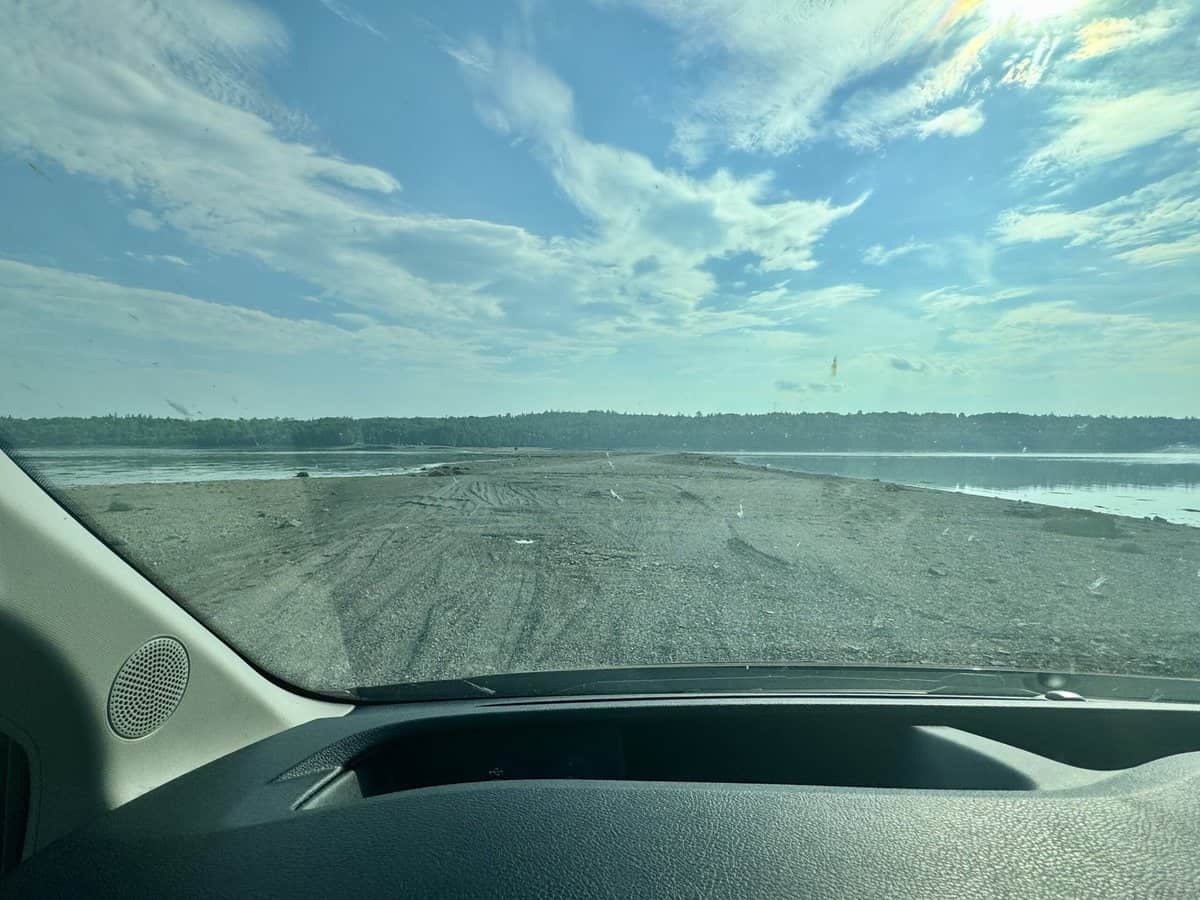
But what happens if you have a flat tire or your car breaks down during the crossing, I wonder? I decide to throw caution to the wind and take a chance, after I see many other cars crossing it. Surely they’ve got a solid plan in place for break downs? At the entrance on the other side of the land bridge, the attendent informs me that I absolutely must be driving across the land bridge again by 6:30 p.m. No worries—I want an even bigger buffer than that, I tell him.
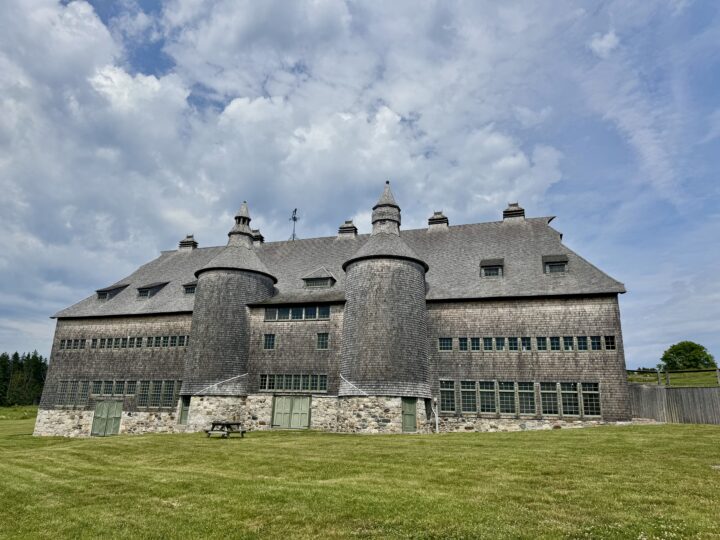
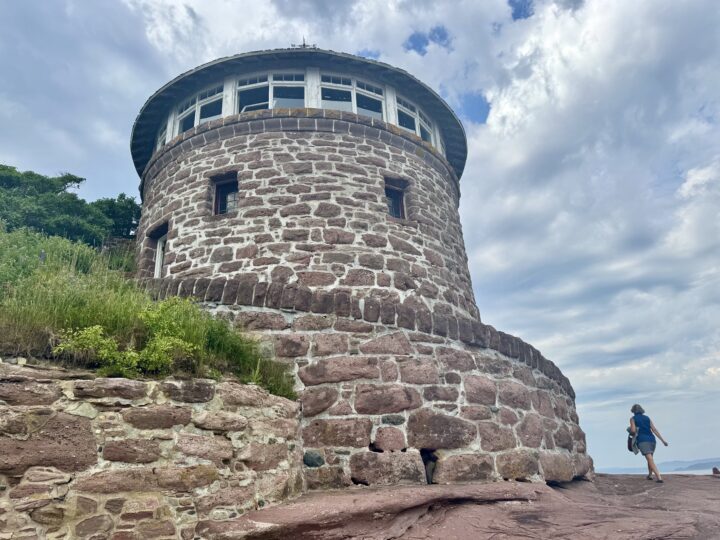
I thoroughly enjoy exploring the barn (which I mistook for the house initially—it’s enormous!) and home. There is thoughtfully curated information scattered throughout the property to educate visitors at the Van Horne family, but not so much to be overwhelming. There are several miles of hiking trails on the island too, and I chip away at as many of them as I can before heading back to my car to cross the bridge again.
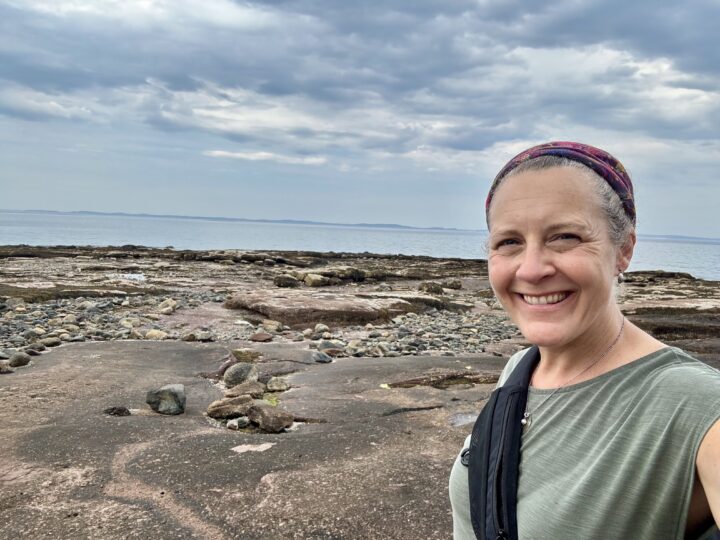
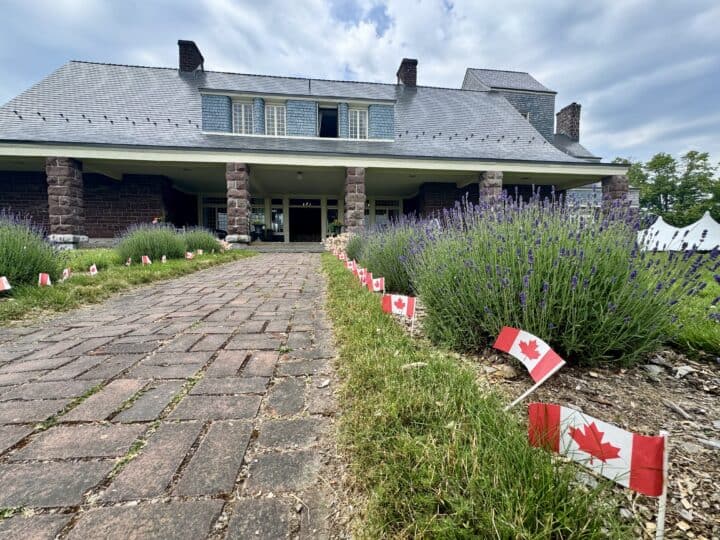
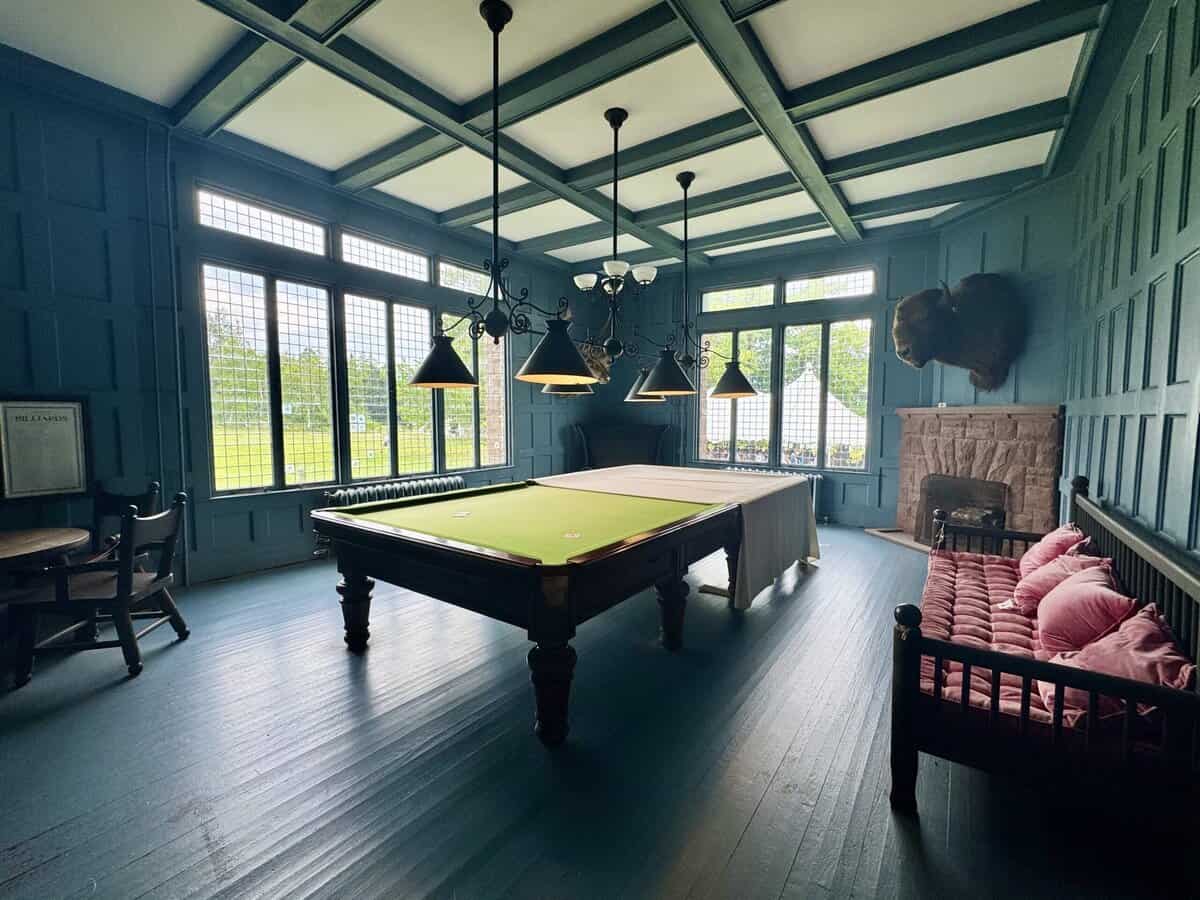
As I drive down the hill toward the water, I see a noticeable difference in the water level, and I’m grateful the land bridge is still very much above water. I make it across easily and head into town for dinner. I eat at a newer restaurant called Noble by the Sea, and it is in a quaint courtyard setting attached to an equally quaint inn. The server talks me into the grilled peach and burrata salad, and it’s excellent.
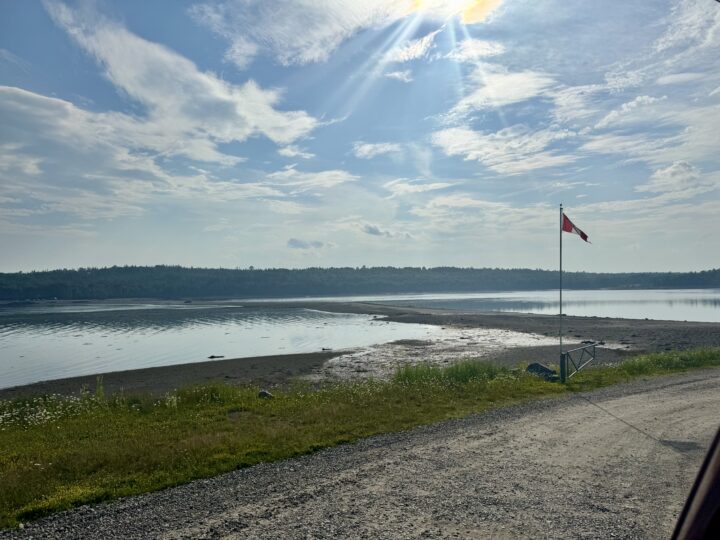
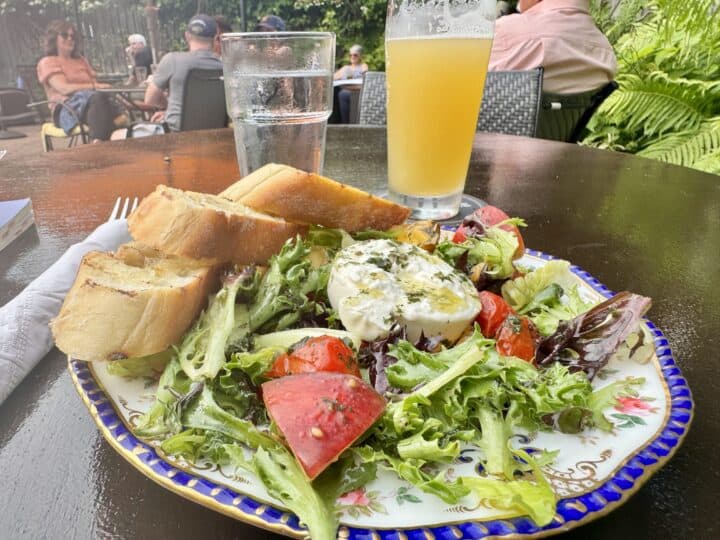
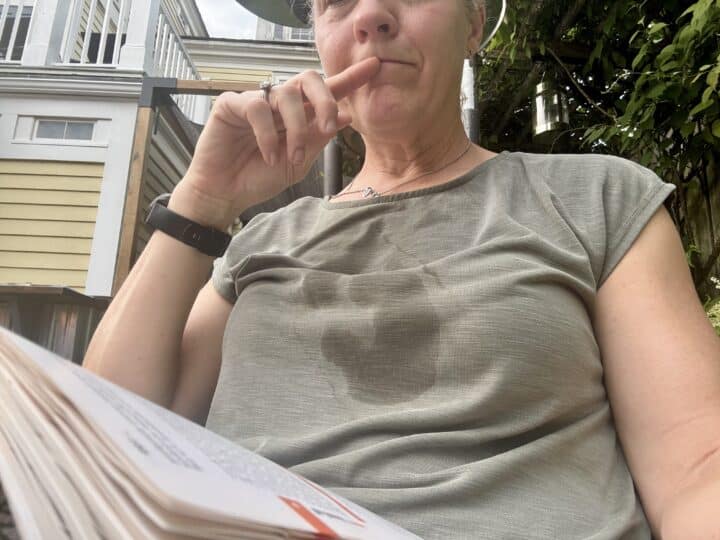
After dinner, I head back to the parking area beside the land bridge, which is now completely submerged. You’d never even know it existed if you hadn’t seen it prior to high tide. The parking area is my home for the night. I found it on iOverlander, an excellent app for finding free camping sites, There are two other campers there with me, and it’s fun watching the tide continue to rise around me.
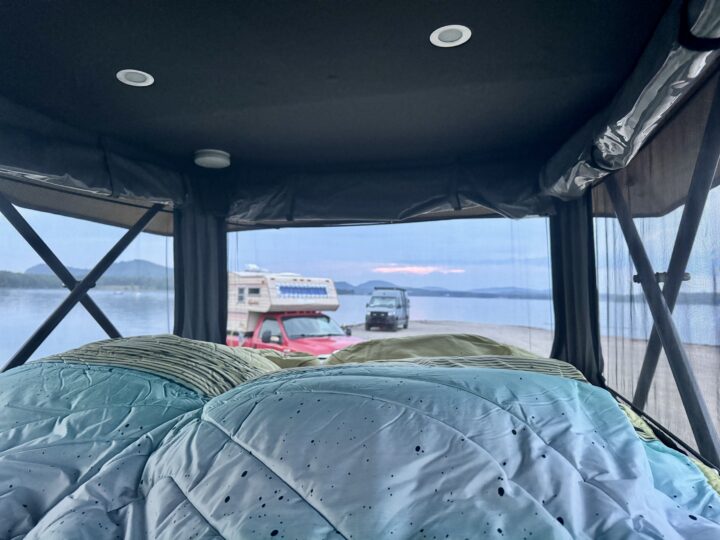
ModVan Moment
ModVans can sleep four people fairly comfortably. The first bed is created by raising the van’s roof with the push of a button and the lower bed is made by placing a second set of bed cushions across the cabinetry and aisle below the upper bed. We’ve even fit five people in ours by putting someone in the aisle on a backpacking sleeping pad (which we dub “the coffin” since it’s a bit more confined and not for the claustrophobic)!
On this trip, however, we’d only need room for three people once Paige and Larry flew in to St. John’s to meet me. In later posts, I’ll share the creative hack we came up with to sleep the third person without needing to bring the second set of bed cushions, which take up a lot of space when they’re not being used as a bed.
I wish I could say it was a restful night sleep in what appeared to be a tranqui spot, but I quickly learned it’s a teen hangout after dark. Loud car stereos and few obnoxious kids make it most unpleasant and I don’t get a ton of sleep. Then Mother Nature decides to be rowdy too and throws a decent squall at the area. I have to batten down the hatches (zip up all the ModVan’s mesh windows) and it’s hard to get back to sleep with the wind gusts. Still, no regrets–it was worth it to watch the tide rise and then to see it at its low point the following morning.
Day 4
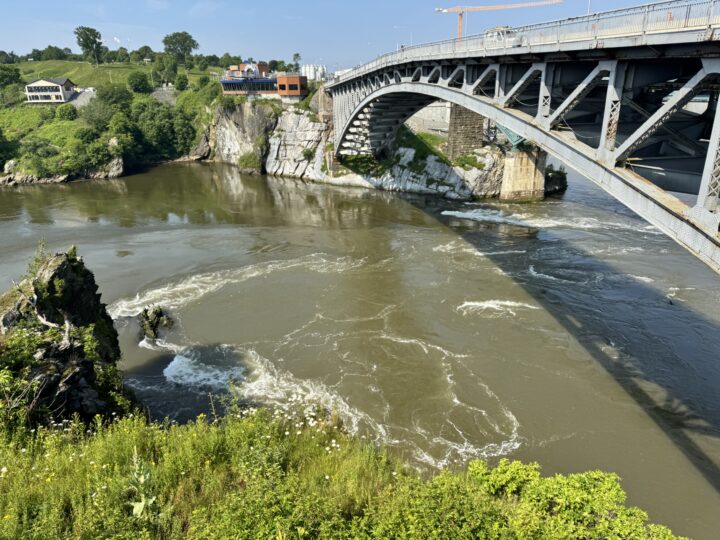
After my restless sleep, I’m not sure how much ground I’ll cover. And I don’t mean driving miles, but perambulation miles. I’ve planned a short day of driving (couple of hours) to be able to take in some sights and visit Fundy National Park. My first stop is Reversing Falls in St. John, the capital of New Brunswick.
It’s an interesting phenomenon created with the Bay of Fundy and the Saint John River. Per the New Brunswick tourism website: “At low tide the river empties into the bay causing a series of rapids and whirlpools. As the tide rises, it slows the river current for a brief period—called slack tide. The Bay’s tide continues to rise, gradually reversing the flow of the river; rapids form again, peaking at high tide. An 8.5-metre (28-foot) tide cycle is roughly 12.5 hours.” The Bay of Fundy creates the highest tides in the world, so it was a neat phenomenon to witness exactly at high tide when the river’s course was reversed completely!
After visiting the lookout points for Reversing Falls, I continue on to Fundy National Park. The Canadian government has waived the entry fee for visitors this summer which was an unexpected perk! Once past the entry booth, I’m even more eager to explore the nearly 5-mile hiking loop I have on my radar. The parking area for the hike is fairly remote and requires about a 20-minute drive down a bumpy, dirt road. I figured I wouldn’t have much company, because of its location. I laugh when I pull into the huge parking area and its nearly full. I think this hike’s popularity is akin to Laurel Falls in the Smokies!
I start my hike on the Moosehead Trail and quickly realize 99% of the visitors do an out-and-back hike to the falls, which is the shortest way to see them. I don’t encounter another soul until about 1-1/2 miles into the hike. I actually encounter six souls—a family with four children, one of whom is wearing a homemade sling on his arm. He doesn’t look like he’s in excrutiating pain, just grumpy. The dad is encouraging him gently, and I’m assuming he fell. They’re speaking French, so I’m useless to help and they look like they have things under control anyway.
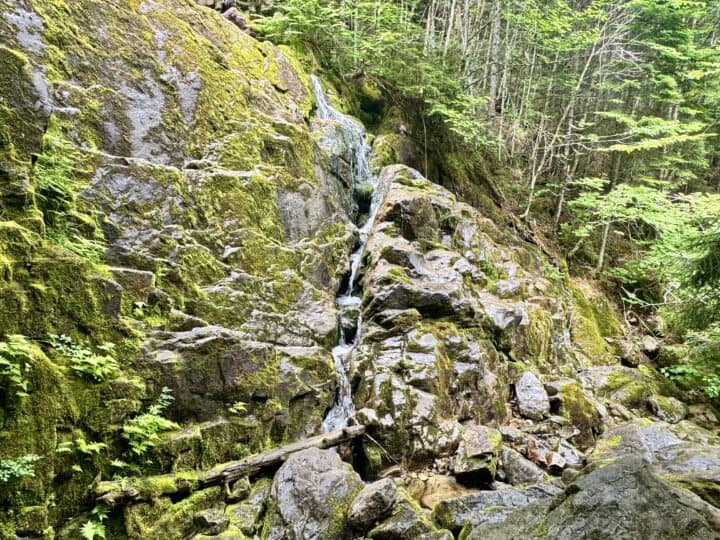
The trail is rocky, rooty and steep in places—it’s easy to see how someone could fall and get hurt. I finally reach the river and a series of swimming holes and cascades that can only be described as stunning. Still, other than the family, no people! If I’d had known how hot and humid it would be, and how inviting this water would look, I’d have worn my swimsuit under my hiking clothes. But alas, I did not, so I continue on, only stopping to splash water on my face a couple of times. It’s so refreshing.
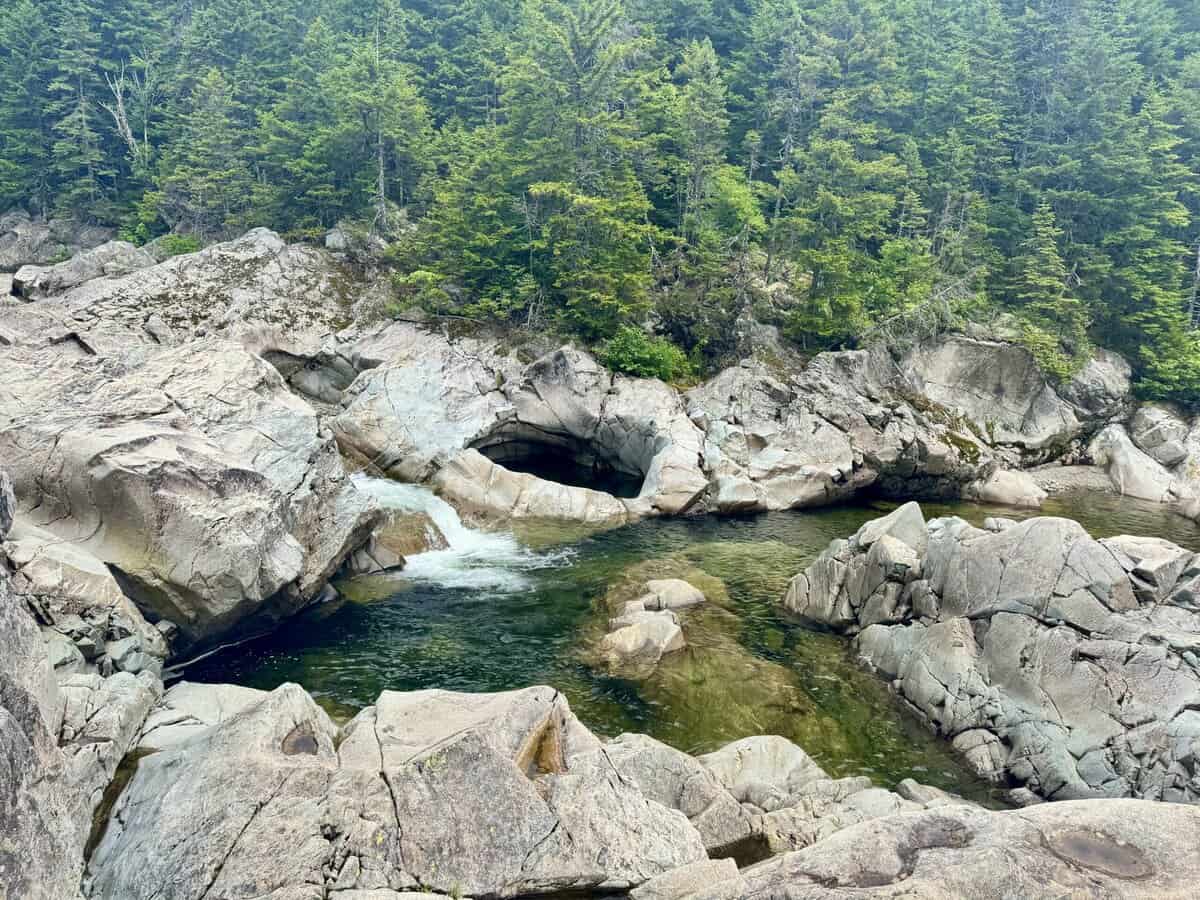
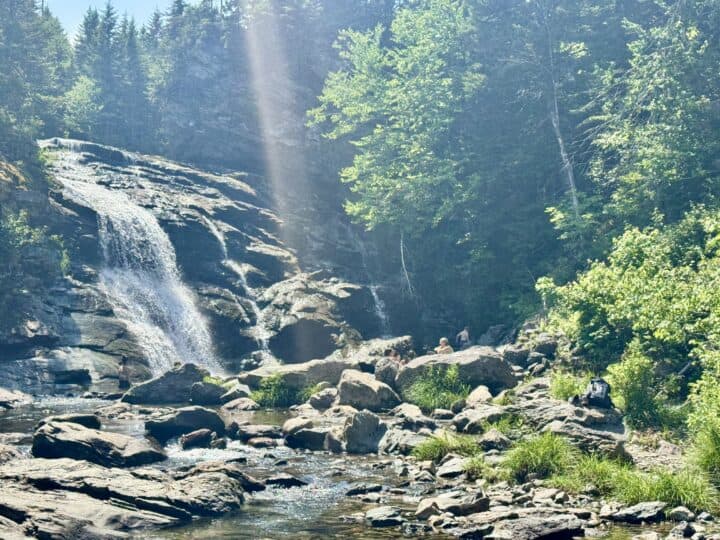
When I arrive at the junction with the Laverty Falls Trail, I encounter more hikers who continue the short distance past the falls to this junction. Some are playing in the water, but they don’t know what they’re missing—the best pools are much further downstream. The falls are crowded with people, so I don’t spend much time at them. I still have one more stop for the day, and I don’t want to miss seeing it at low tide.
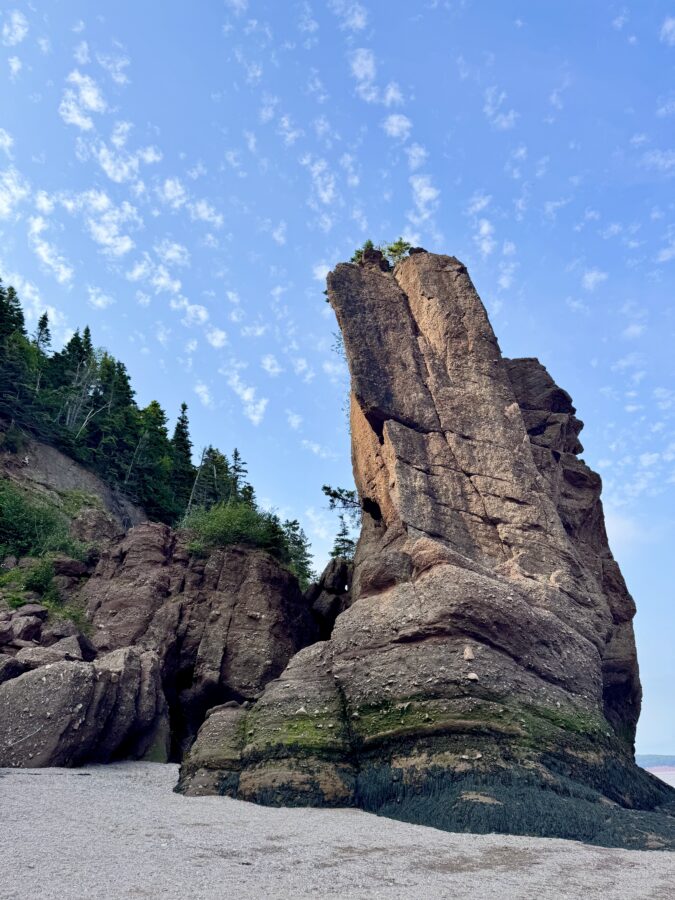
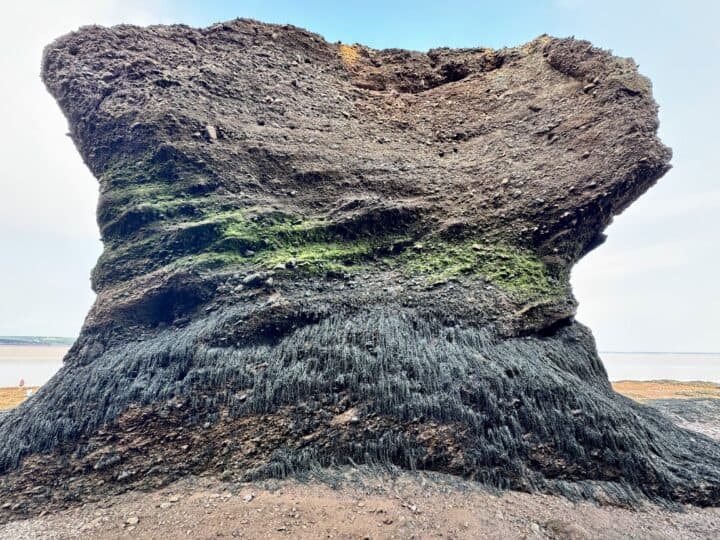
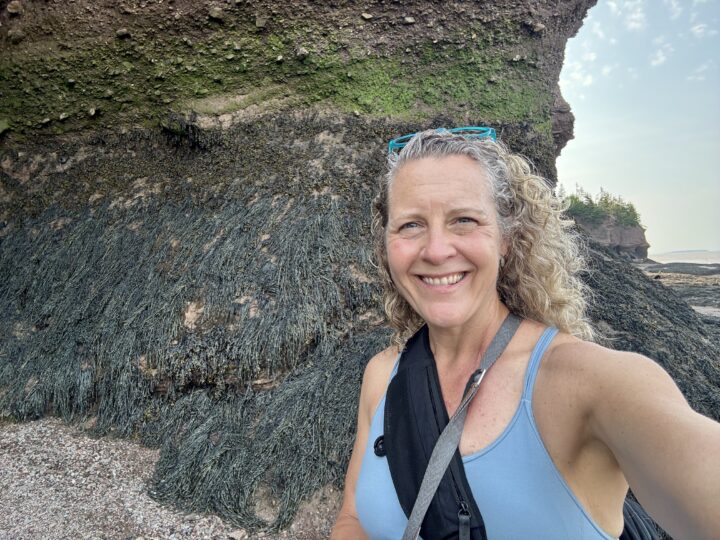
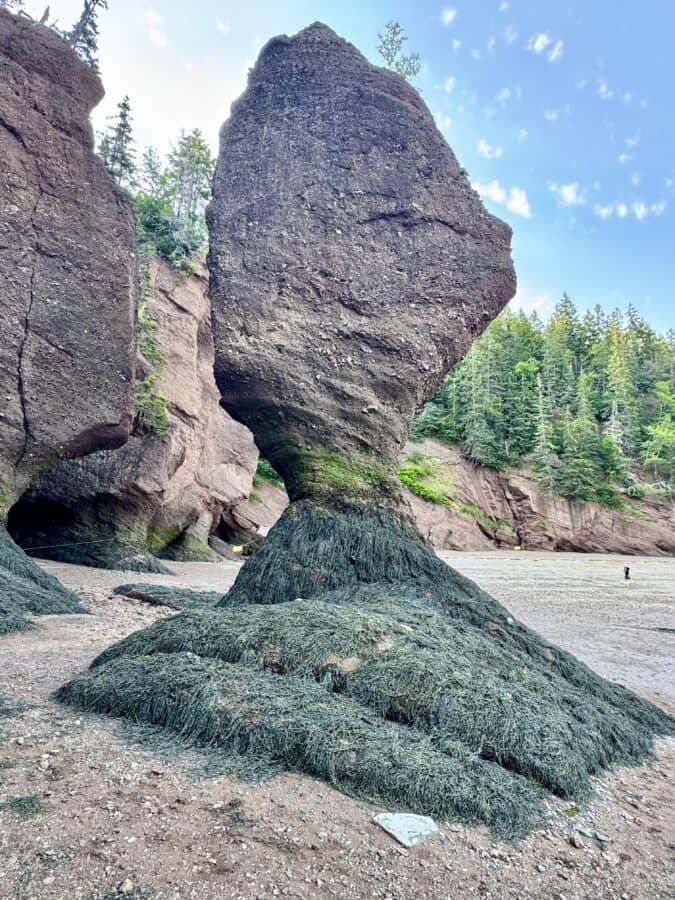
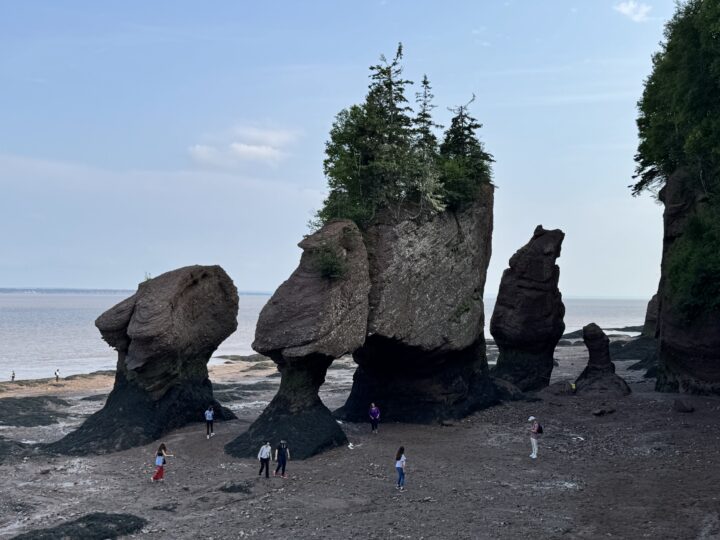
I finish the hike and decide it’s worth a quick trip to the national park’s comfort station to take a quick shower. I’m so impressed with Canadian national parks and their amenities! Next, I drive to Hopewell Rocks, which are a collection of sea stacks you can walk among at low tide. At high tide, you can take a kayak tour amid them! Your entry fee into the state province is good for two days, giving visitors a chance to see witness them at low and high tide (there are lookouts to see them from above if you don’t take a kayaking tour).
But since it’s low tide, the beach where they stand is crowded with visitors on foot, but it doesn’t detract from their beauty. The have clever names like E.T. and Mother in Law, although I had a hard time discerning which rock belonged to which name.
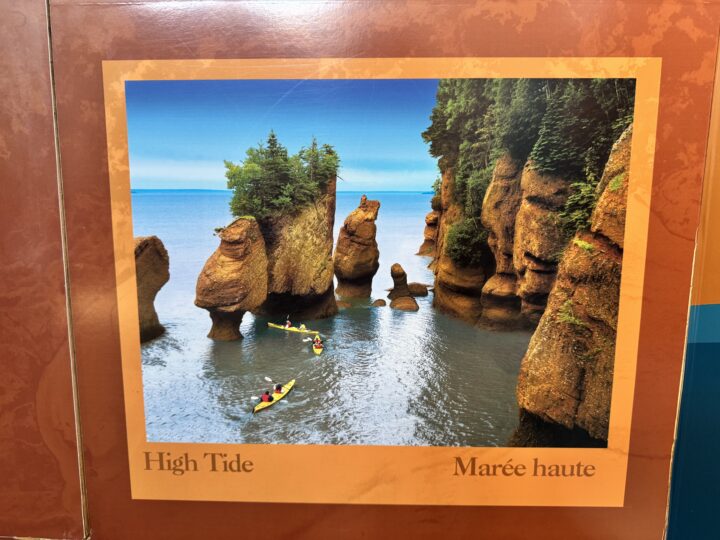
After leaving the rocks, I stop in a roadside sandwich shop and order a delicious sandwich made with waffles for bread. The chicken caesar is excellent. Despite knowing I haven’t burned nearly enough calories throughout the day to justify the additional splurge, I also indulge in their ice cream, stacked in an enormous waffle cone. (because, vacation!).
My next hurdle is choosing a spot to camp. There are no Harvest Host locations nearby, so I pick a spot on iOverlander. Recent visitors claimed it was quiet and safe. It was alongside the river at the base of an old dam and two enormous pylons.
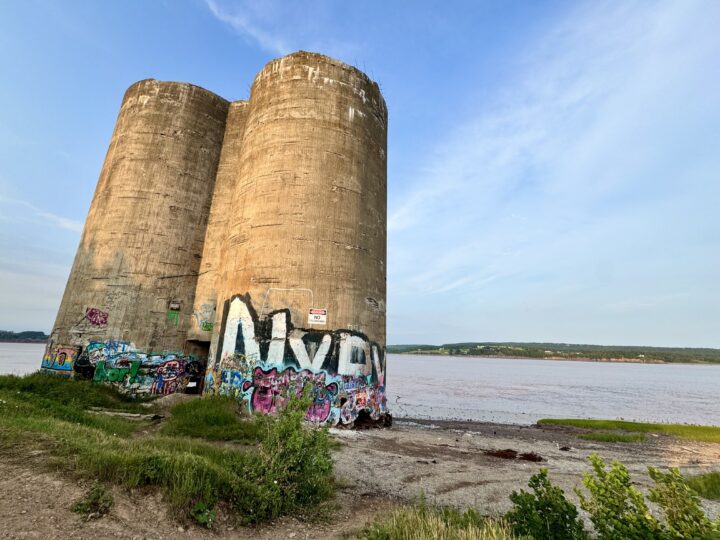
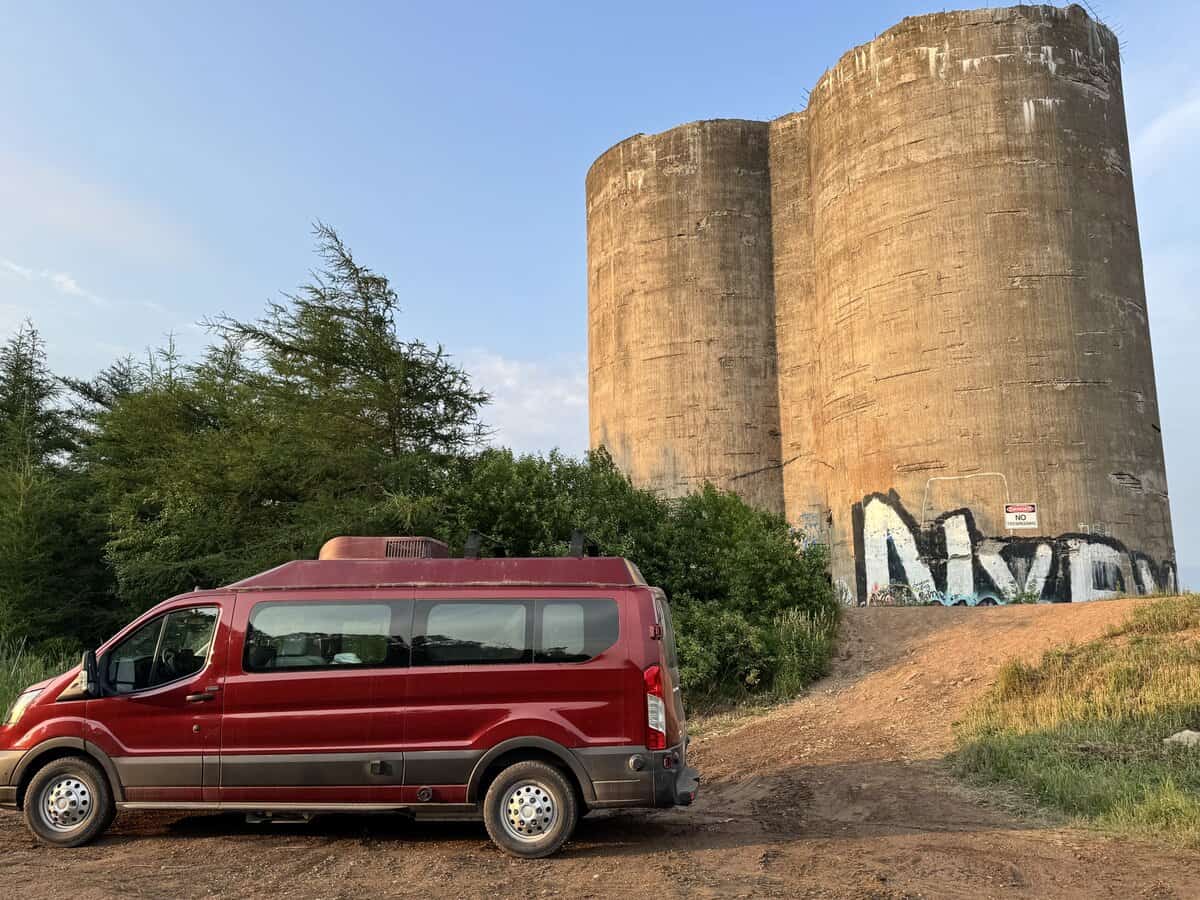
Little did I know it was a very active road for local walkers, and I felt a bit awkward families and individuals traipsed with dogs or kids. No one seemed to mind my van all popped up, a dead giveaway that I was camping there. The sun set and the fireflies came out in the field across the road. I watched them from my bed until my eyelids became too heavy to keep them open another second.
Thank you for sharing your trip, Nancy! I feel like I’m there with you! Crossing the border was scary, I’m sure. It’s sad how much has changed between our two countries. Regardless, I’m now looking at planning a trip to Newfoundland next year. You’ve inspired me, again!
Oh, I hope you take a trip there! You’d absolutely love it, Beth!
Eagerly awaiting each day’s post! We visited friends in Nova Scotia a few summers ago and traveled as far as PEI….but now I want to visit Newfoundland as well!